What Can You Learn by Building a CPU in Chip Builder?
A Chip Builder circuit that looks right on screen fails the moment the inputs change. How far does the game take you, from logic gates to a working CPU?
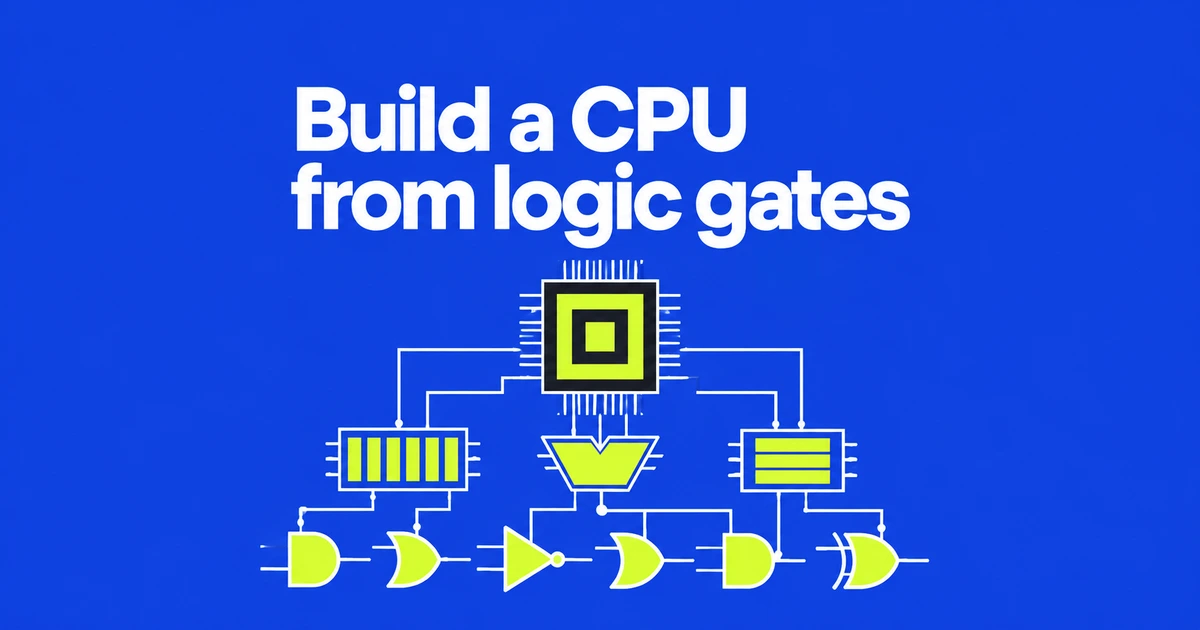
- Chip Builder turns digital logic into circuit puzzles that lead to a working CPU and programs.
- The official campaign extends into fabrication, AI accelerators and company management.
- It targets Windows; store descriptions disagree on campaign counts and the minimum OS.
Connect components and check their behavior
Chip Builder makes computer architecture tangible through wiring puzzles. Released on September 21, it casts you as a junior engineer at the fictional ChipCorp, building a computer from simpler parts.
The Steam description explains the basic interaction: place components, connect outputs to inputs and watch signals travel. Circuits are checked against their required truth tables, so the task is to produce the correct behavior, not merely arrange a convincing diagram.
The campaign connects memory, computation and control
The official chapter list starts with transistors and gates, then introduces adders, multiplexers and decoders. Latches, registers and memory lead into an ALU; the CPU stage combines a program counter, control unit and datapath.
Once the machine exists, the campaign moves to machine code and assembly, followed by pipelining, caches and instruction-set design. The advertised progression connects hardware behavior to executing instructions rather than focusing on the syntax of a particular high-level language.
The Epic listing offers Guided, Normal and Hard modes, with hints and step-by-step help.
Fabrication and an AI accelerator follow the CPU
The later official chapters take the design through in-game fabrication, then introduce an AI accelerator built around multiply-accumulate cells and a systolic grid. The final FAB CEO chapter changes pace: you manage ChipCorp week by week across 35 simulated years.
The fabrication process takes place within the game, extending the campaign beyond circuit design.
Check the Windows requirements and the store you choose
The published platform is Windows, and Steam lists English interface and subtitle support. Epic specifies Windows 10 64-bit, a 2.5GHz quad-core Intel or AMD CPU, 4GB RAM, a DirectX 11 graphics card with 4GB VRAM and 2GB storage. A keyboard and mouse are required.
The listings need attention: Steam names XP as its minimum OS. Campaign totals also differ—12 chapters and 49 levels on the official site, 11 and 39 on Steam, and 10 and 43 on Epic. If a late-game chapter is your reason to buy, confirm its availability for that storefront with the developer.
The main attraction is the sequence from wiring circuits to running instructions. Check that progression against what you want to learn, alongside the language and PC requirements.